Disinfecting vs. Cleaning: What Every Client Should Know
Cleaning, sanitizing, and disinfecting are three different jobs. Knowing the difference lets you protect a home properly and explain your work with confidence.
Three words that are not the same
Clients often use cleaning and disinfecting as if they mean the same thing. They do not, and the difference is not just wording. Each one does a specific job, and using the wrong one, or the right one incorrectly, leaves a home less protected than the client believes. A professional who can explain this clearly earns trust immediately, because most people have never had the distinction spelled out for them.
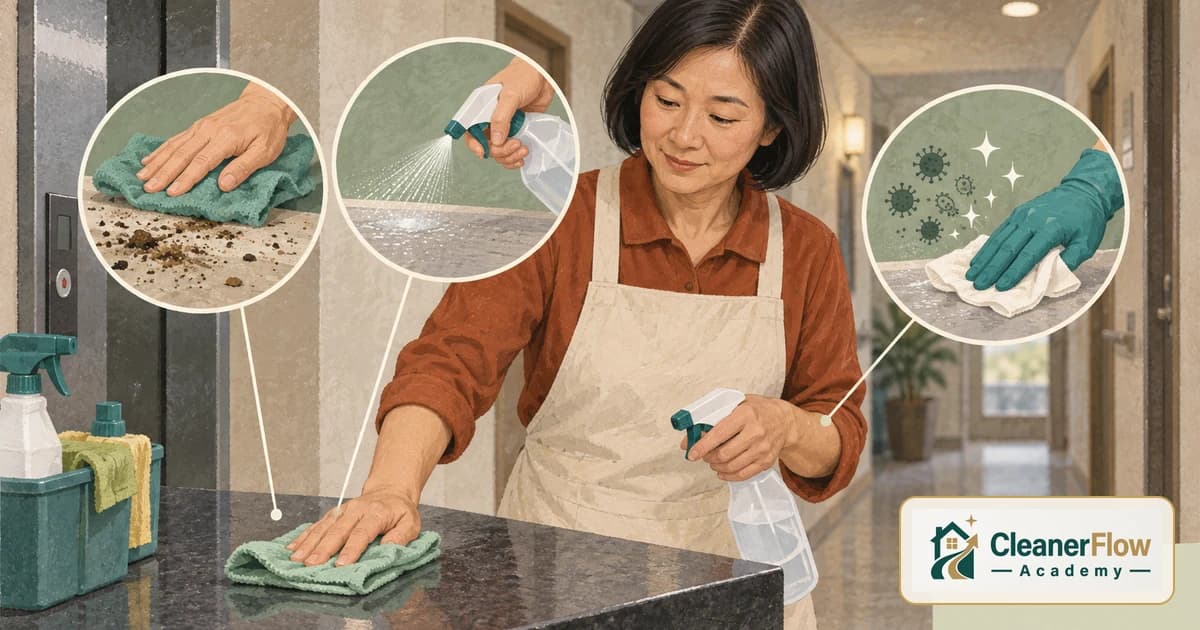
Cleaning removes dirt, dust, grease, and a portion of the germs from a surface by physically lifting them away with soap or detergent and water. Sanitizing lowers the number of germs to a level that public health standards consider safe. Disinfecting uses chemicals to kill a very high percentage of germs on a hard surface. Picture a ladder: cleaning is the base, sanitizing is a step up, and disinfecting is the top.
The mistake most people make is assuming the top of the ladder is always the goal. It is not. A well cleaned home is a healthy home for the vast majority of surfaces, and disinfecting is a targeted tool for specific spots and specific moments. Knowing when to climb the ladder, and when to stay at the bottom, is the heart of doing this work well.
Why cleaning has to come first
Here is the single most important fact to carry into every home: you cannot disinfect a dirty surface. Disinfectants are designed to act on the surface itself, not on a layer of grime sitting on top of it. When dirt, grease, or food residue covers a surface, the disinfectant reacts with that debris instead of reaching the germs underneath. The result is a surface that looks treated but was never actually protected.
This is why professionals always clean first and disinfect second. You wipe away the visible soil with detergent and water, and only then apply the disinfectant to the now clean surface. Skipping the cleaning step is the most common mistake people make at home, and it is the easiest way to give a client real value: do it in the correct order every time.
Think of a kitchen counter after someone has trimmed raw chicken. There may be a thin film of juice and fat across the surface. If you spray disinfectant straight onto that film, the chemical spends itself breaking down the fat and never reaches the bacteria you are worried about. Wipe the counter with soapy water first, dry it, and only then disinfect, and every drop of the product goes to work where it matters.
Contact time is everything
The second fact that separates a professional from an amateur is contact time, sometimes called dwell time. Every disinfectant needs to stay wet on the surface for a specific number of minutes to actually kill germs. That time is printed on the product label, and it is usually longer than people expect, often between one and ten minutes depending on the product.
Spraying a disinfectant and wiping it off a few seconds later does almost nothing. The surface looks wiped, but the chemical never had time to work. To disinfect properly, you spray or apply the product, then leave it visibly wet for the full contact time listed on the label, and only wipe afterward if the label tells you to. On a surface that dries too fast, apply a second coat to keep it wet for the required time.
A simple way to build this into your routine is to disinfect early and come back later. Apply the product to bathroom fixtures or a kitchen prep area at the start of the room, then move on to dusting or another task while the chemical does its work. By the time you return, the contact time has passed and you can wipe or leave it to dry, whichever the label directs. This habit, respecting contact time, is one of the clearest signs of a trained professional, and it is worth explaining to a client so they understand you are not rushing.
Where each job belongs
Not every surface needs disinfecting, and treating a whole home as if it does wastes product, time, and money, and exposes people to more chemicals than necessary. The smart approach is to match the job to the surface.
Most surfaces in a home simply need cleaning: floors, windows, furniture, and general counters that are not handling raw food. Disinfecting is reserved for high risk, high touch spots and for situations where illness is a concern.
In the kitchen, disinfect where raw meat, poultry, or eggs are prepared, along with the sink, which collects more bacteria than most people realize. In the bathroom, disinfect the toilet and its handle, the surrounding surfaces, and the faucet handles. Throughout the home, the doorknobs, light switches, faucet handles, remote controls, and phone surfaces are the points many hands touch and are worth disinfecting, especially when someone is sick.
Everything else, the coffee table, the bookshelf, the window ledge, the floor, needs good cleaning, not disinfecting. Explaining this to a client shows judgment. You are not just following a routine, you are deciding where protection actually matters.
Reading the label like a professional
A disinfectant is a registered product, and the label is a set of instructions, not a suggestion. Three things on that label matter most. First, the contact time, so you know how long to keep the surface wet. Second, whether the surface needs to be pre cleaned, which for a home it almost always does. Third, whether the product is safe for the surface you are treating and whether it needs to be rinsed off afterward, which is important for any surface that touches food or skin.
Some products are designed to be left to air dry; others must be wiped or rinsed, especially on counters where food will be placed or on toys a child might put in their mouth. When in doubt, rinse food contact surfaces with clean water after the contact time has passed. Reading these three points takes ten seconds and prevents both wasted effort and damaged surfaces.
The safety rules you never break
Never mix disinfecting products together. Combining certain cleaners, especially anything containing bleach with anything containing ammonia, can create dangerous fumes that are genuinely hazardous in a closed bathroom. Many glass cleaners contain ammonia, so this is not a rare combination to stumble into. When you switch products, rinse the surface or wipe it down with water first.
Disinfectants are stronger chemicals than everyday cleaners, and they deserve respect. Open a window or run a fan when you use them, especially in a small bathroom. Wear gloves to protect your skin, and avoid touching your face while working. Store products in their original containers so the label instructions stay with the product, and keep them out of reach of children and pets.
If a home has children, pets, or someone with breathing sensitivities, lean toward the gentlest effective product and rinse food contact surfaces well. A professional does not reach for the strongest chemical as a default. The goal is the right level of protection with the least exposure, which is both safer and more respectful of the family living there.
The cloths matter as much as the chemicals
A disinfectant applied with a dirty cloth is a disinfectant working against itself. If you wipe the toilet and then wipe a kitchen counter with the same cloth, you have just carried bathroom germs into the room where food is prepared. Cross contamination like this quietly undoes careful work.
The professional habit is to keep separate cloths for separate zones. Many cleaners use a simple color system: one color for the bathroom, another for the kitchen, another for general surfaces. Microfiber cloths are worth the small cost, because their fine fibers physically trap dirt and germs rather than smearing them around, and they leave glass and chrome streak free. Use a fresh cloth or a fresh side as you move to a cleaner surface, and launder the used ones in hot water so they start each job truly clean.
Real situations where the difference matters
A few common scenarios show how this knowledge plays out.
When someone in the household has the flu or a stomach bug, a targeted disinfecting pass of high touch surfaces, doorknobs, light switches, the bathroom, faucet handles, and the remote control, does real good. This is a moment where your knowledge directly protects a family.
After groceries or takeout arrive, most people do not need to disinfect anything; a normal clean is enough. Understanding this keeps you from alarming a client or wasting product on low risk tasks.
In a home with a new baby, parents are often anxious and ask for everything to be disinfected. The professional answer is to clean thoroughly everywhere and disinfect the genuinely high touch and feeding related surfaces, while being honest that a spotless, well cleaned home is already a healthy one.
Common mistakes to avoid
Most failures in this area come down to a short list of habits.
- Spraying a disinfectant and wiping it off within seconds, so it never reaches its contact time.
- Applying disinfectant over grime instead of cleaning first.
- Using one cloth across the whole home and spreading germs from dirty to clean surfaces.
- Mixing two products together, especially bleach with anything containing ammonia.
- Treating the entire house as if it needs disinfecting, wasting product and exposing people to unnecessary chemicals.
- Working in a closed room with no ventilation.
Avoiding these six is most of what it takes to disinfect safely and effectively.
How to explain it to a client
Many clients ask for a home to be disinfected because they have heard the word and it sounds thorough. Part of your job is to translate. You can tell them, simply, that you will clean every surface to remove dirt and germs, and that you will disinfect the specific spots that carry the most risk, such as bathroom fixtures, kitchen food prep areas, and the handles and switches that everyone touches. That explanation reassures them far more than a vague promise to disinfect everything, because it shows you know exactly what you are doing.
When a member of the household has been ill, offer a more thorough disinfecting pass of high touch surfaces. Naming the service and explaining why turns your knowledge into something the client can see and value.
Knowledge is part of the service
The cleaning itself is only half of what you provide. The other half is judgment: knowing the order of operations, respecting contact time, choosing the right treatment for each surface, and explaining your choices so the client feels safe. That knowledge is exactly what a certification such as CleanerFlow Academy is built to recognize, and it is what separates someone who wipes surfaces from someone a family trusts with their home. CleanerFlow Academy certification is trilingual, and it validates the skill you already have.
When a client understands the difference between cleaning and disinfecting, they also understand the value of hiring a professional who does both correctly. That understanding is something you can give them in a single, calm conversation, and it will stay with them long after you leave.
You already clean well. Now you can prove it.
The 7 modules are free. The certificate, with a QR your client checks on the spot, proves what you already know how to do.
Other CleanerFlow apps
Your whole week in one place.
Homes, notes for every client, and who already paid, on your phone — even offline.
Cleaning jobs in your ZIP. See the quality score before you pay.
Every lead goes to 3 cleaners at most, and you get 14 days to dispute a dud.